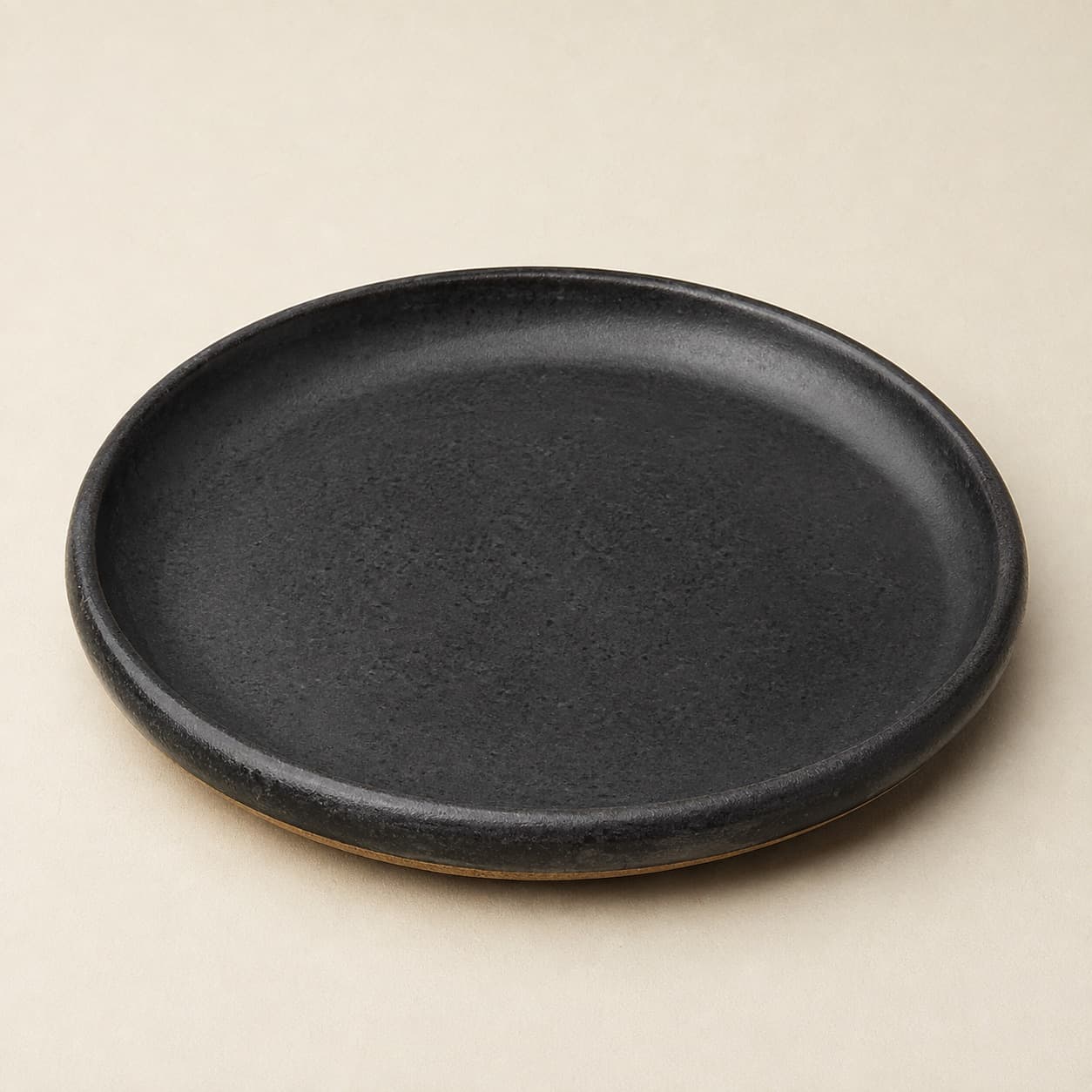

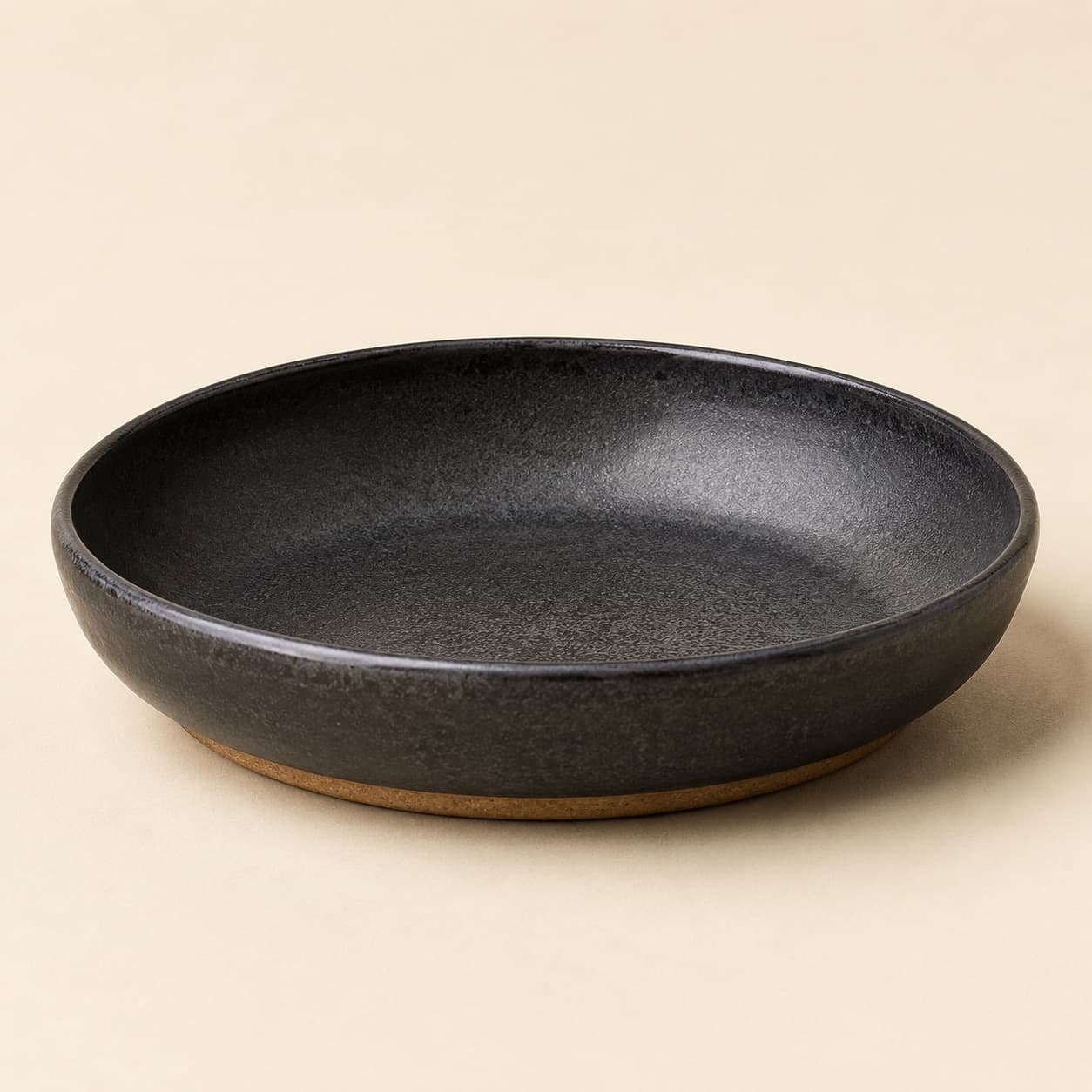
Dinner Plate Ø26
DKK 195
- Pitch
- 20 mm
- Rim
- 5.0 mm
- Cycles
- 1,500
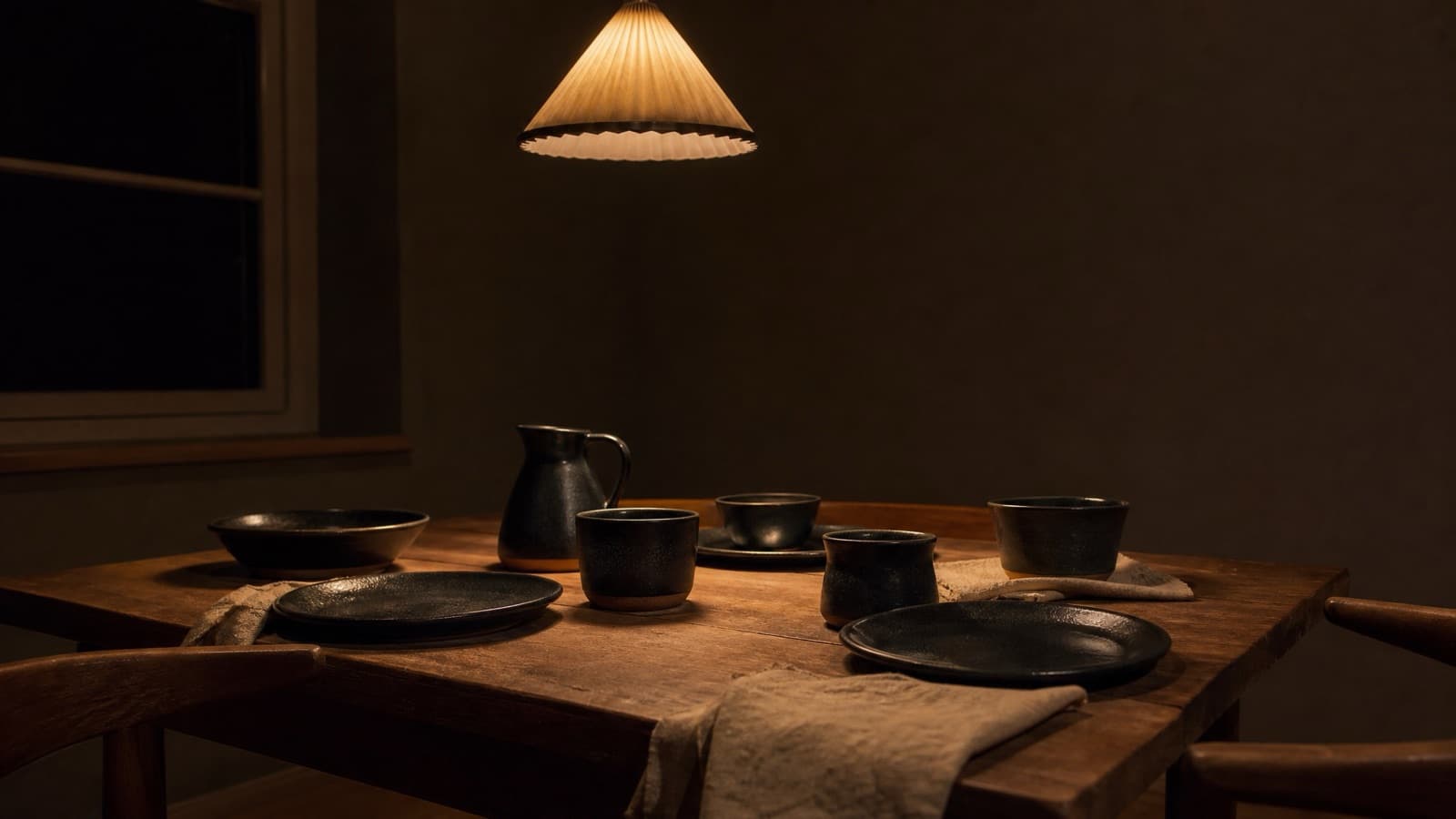
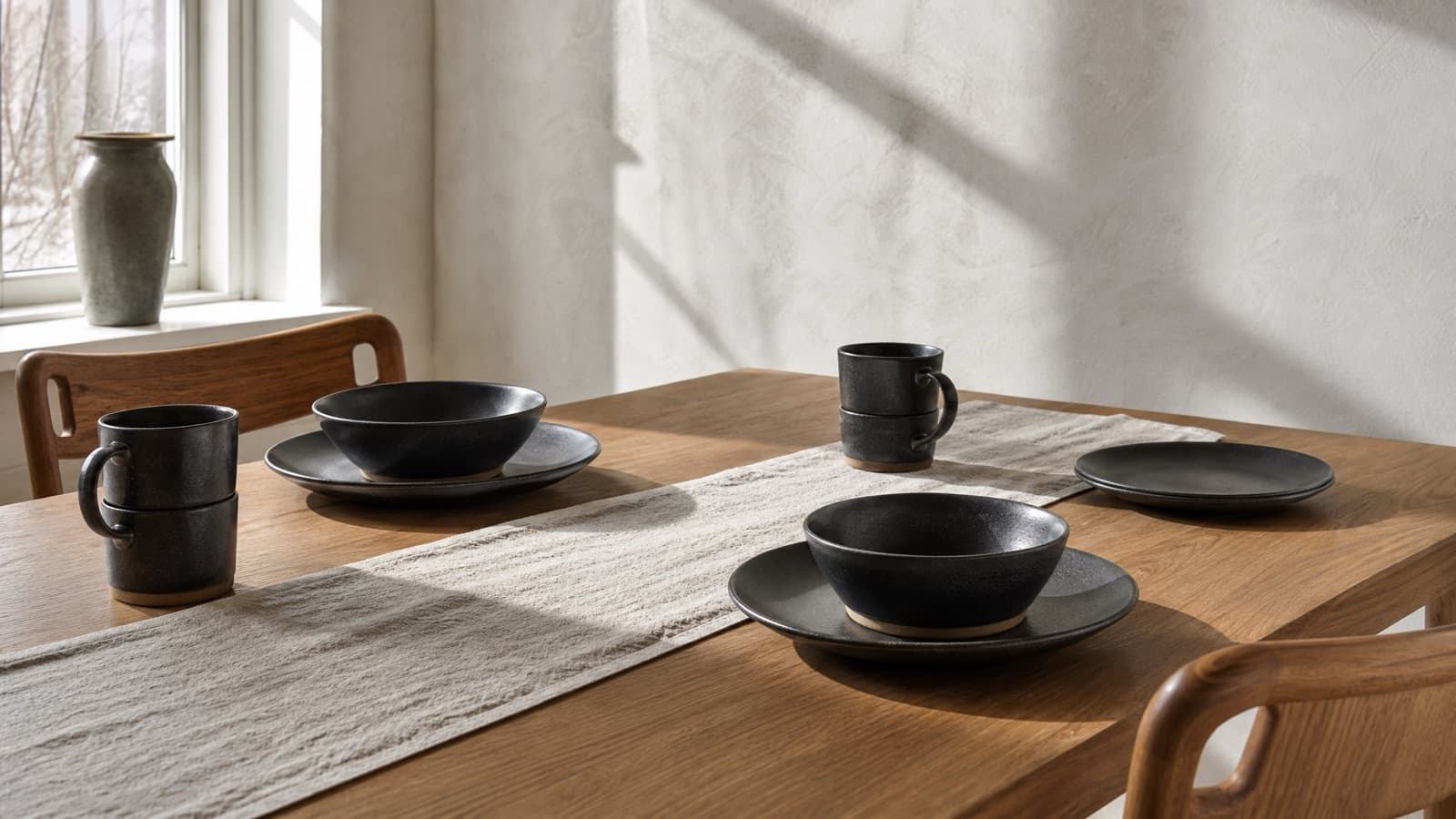
07:12 and 19:40 — one service
Every piece publishes what a working kitchen actually asks about: how tall the stack is, how thick the rim is, and how many wash cycles it went through before the glaze moved. Break one and you buy one, not the set.
01 — The claim
A set that has to be replaced as a set is a set you stop using. We publish the measurements a professional kitchen buys on, and we keep the pieces on open stock, so a broken plate costs a plate.
Outer size, internal depth, stacking pitch, rim section, weight and capacity are printed on every piece.
Cycle counts never appear without the protocol that produced them. No absolute claims, anywhere.
Open stock for the pieces that break first, with the glaze batch stated before you order.
02 — The ledger
One piece plus the pitch of every piece after it. This is the number that decides whether a service fits behind the pass.
| Piece | Height | Pitch | Ten high | Rim | Cycles |
|---|---|---|---|---|---|
| Side Plate Ø16 | 20 mm | 18 mm | 182 mm | 4.5 mm | 1,500 |
| Dinner Plate Ø26 | 26 mm | 20 mm | 206 mm | 5.0 mm | 1,500 |
| Pasta Plate Ø24 Deep | 44 mm | 26 mm | 278 mm | 5.0 mm | 1,400 |
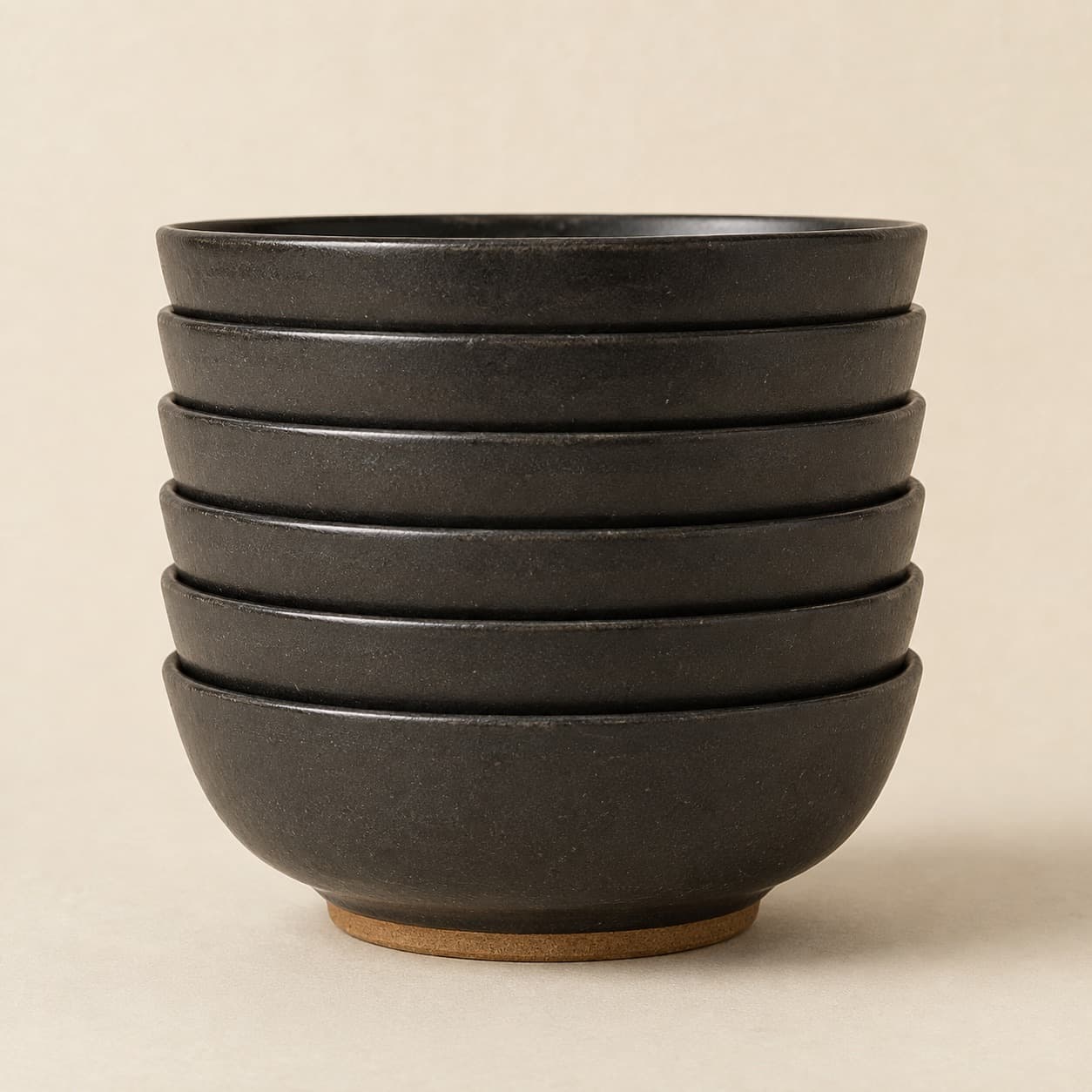
| Cereal Bowl Ø15 | 62 mm | 26 mm | 296 mm | 5.0 mm | 1,500 |
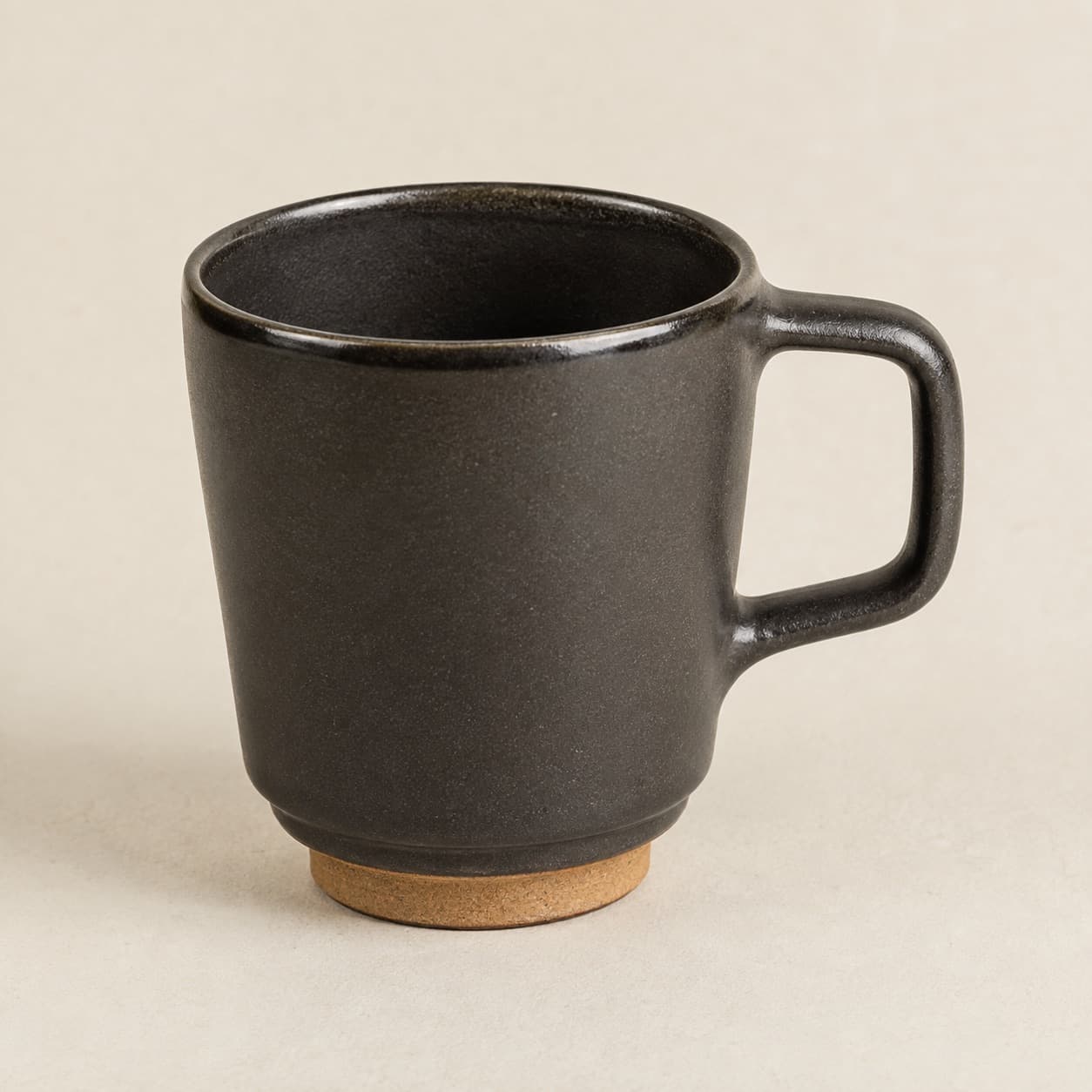
| Stacking Mug 300 ml | 95 mm | 48 mm | 527 mm | 5.0 mm | 1,300 |
| Stacking Prep Bowl Ø12 | 50 mm | 15 mm | 185 mm | 4.5 mm | 1,600 |
Cycle figures come from SL-DW-01, our own dishwasher protocol — a commercial rack machine at 65 °C wash and 85 °C rinse, gloss measured every hundred cycles. The full method, and what it does not claim
03 — Shelf depth
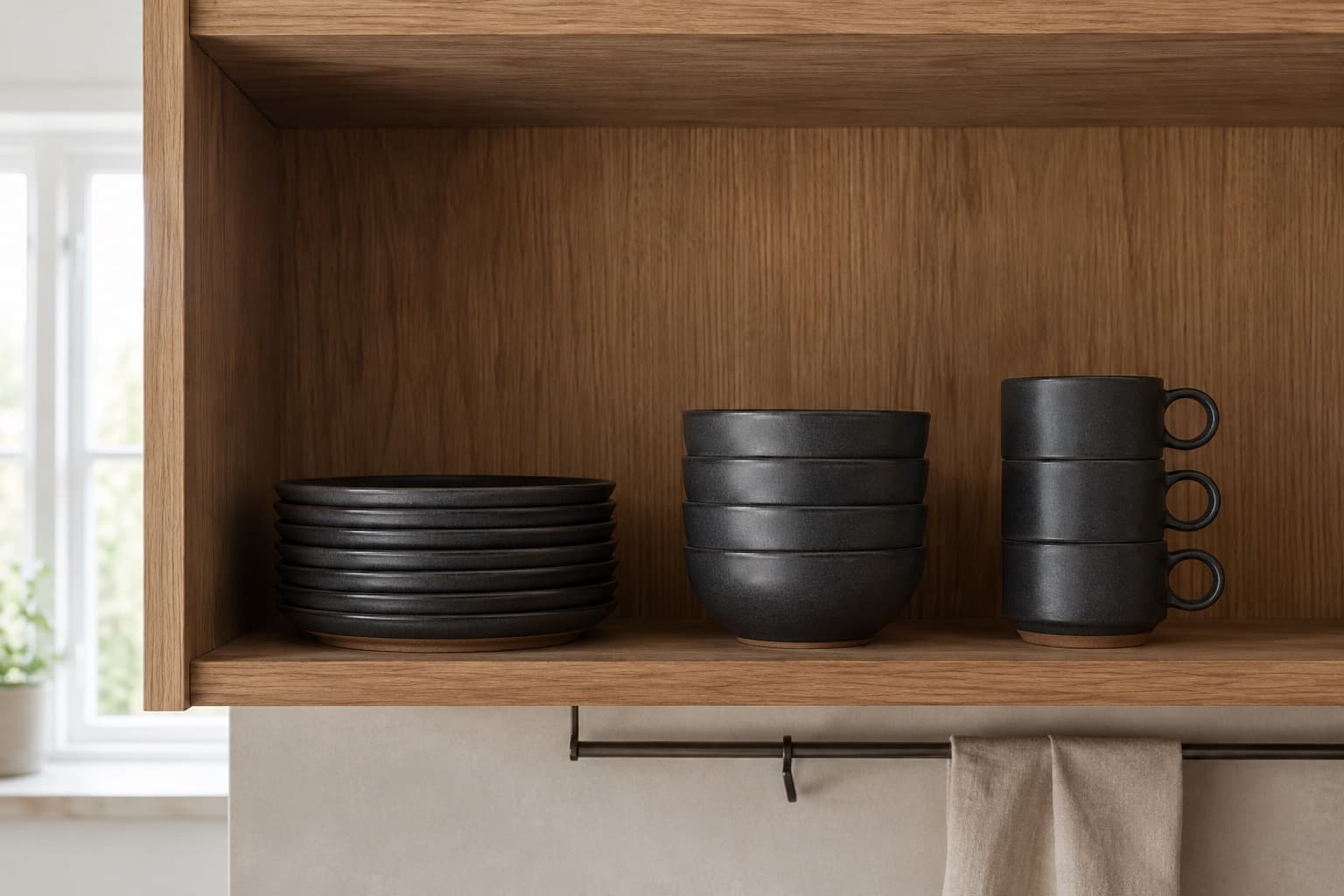
A 26 cm plate is 26 mm tall on its own and adds 20 mm for every plate after it. That is the whole calculation, and it is on the page of every piece that stacks — along with the pieces that do not, which say so.
Allow about 40 mm above the column to lift it out cleanly. The service builder totals this for you across a whole configuration.
Count a service04 — The range
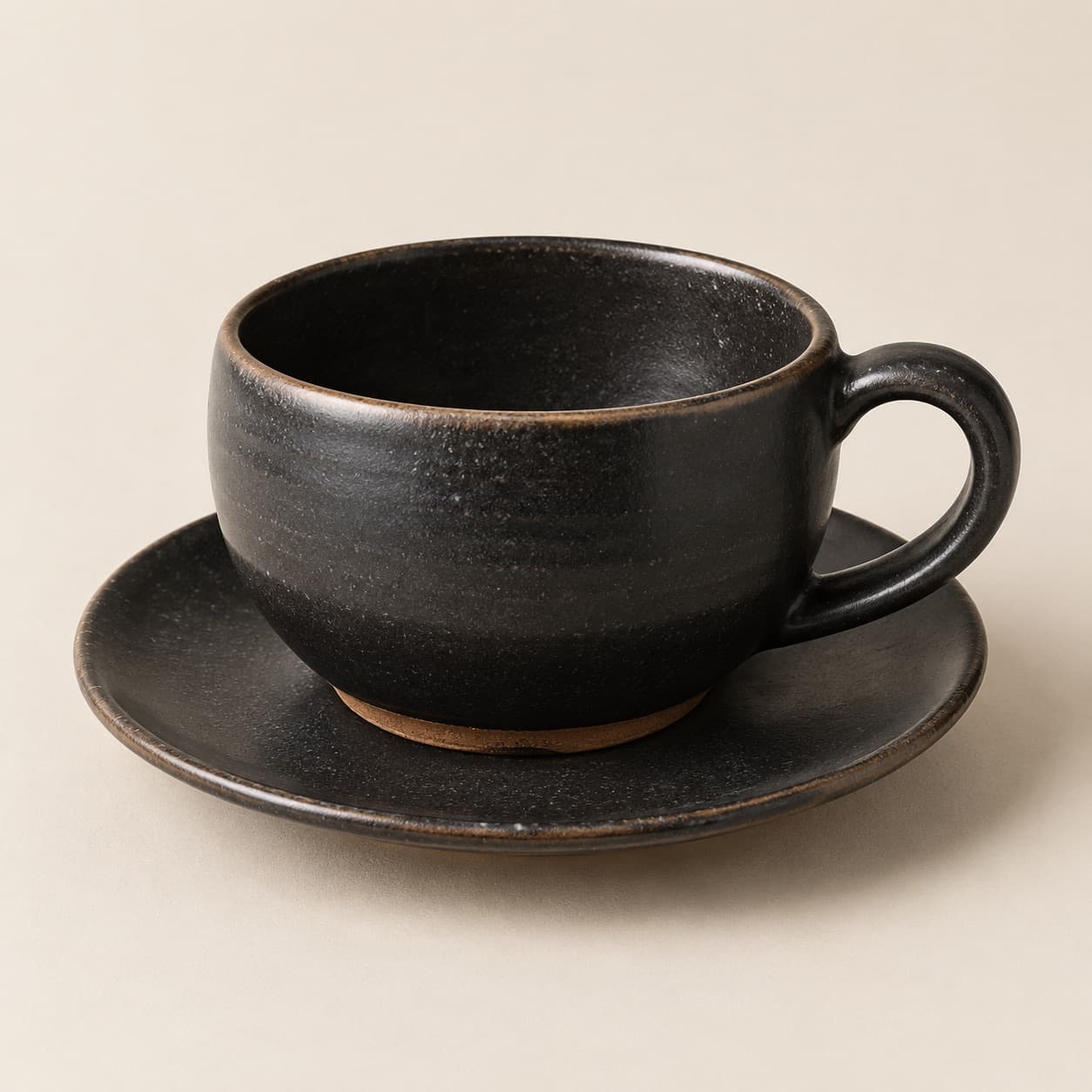
Six lines and three counted sets. Hover a piece to see the column it makes.
DKK 195

DKK 175
DKK 195
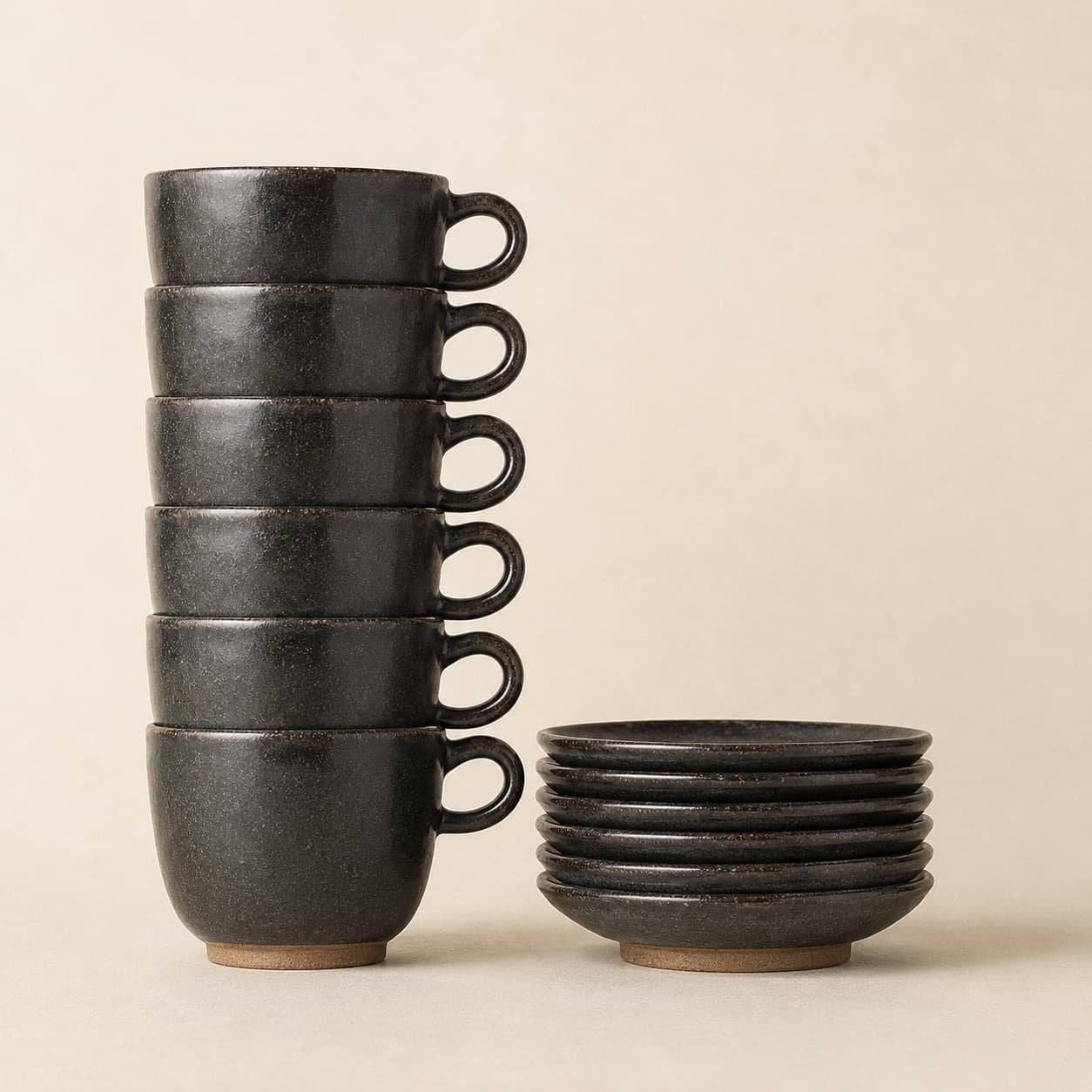
DKK 205
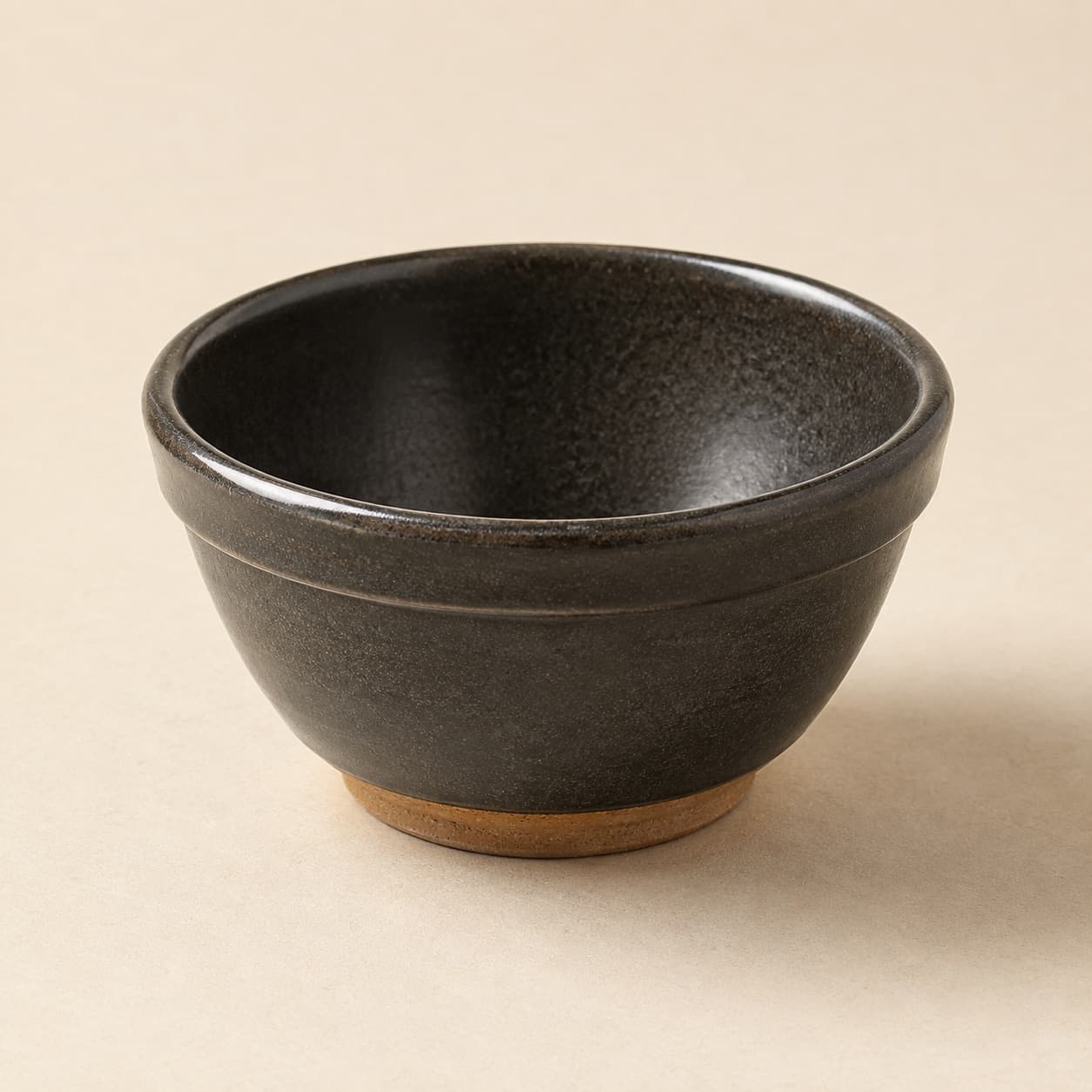

DKK 105
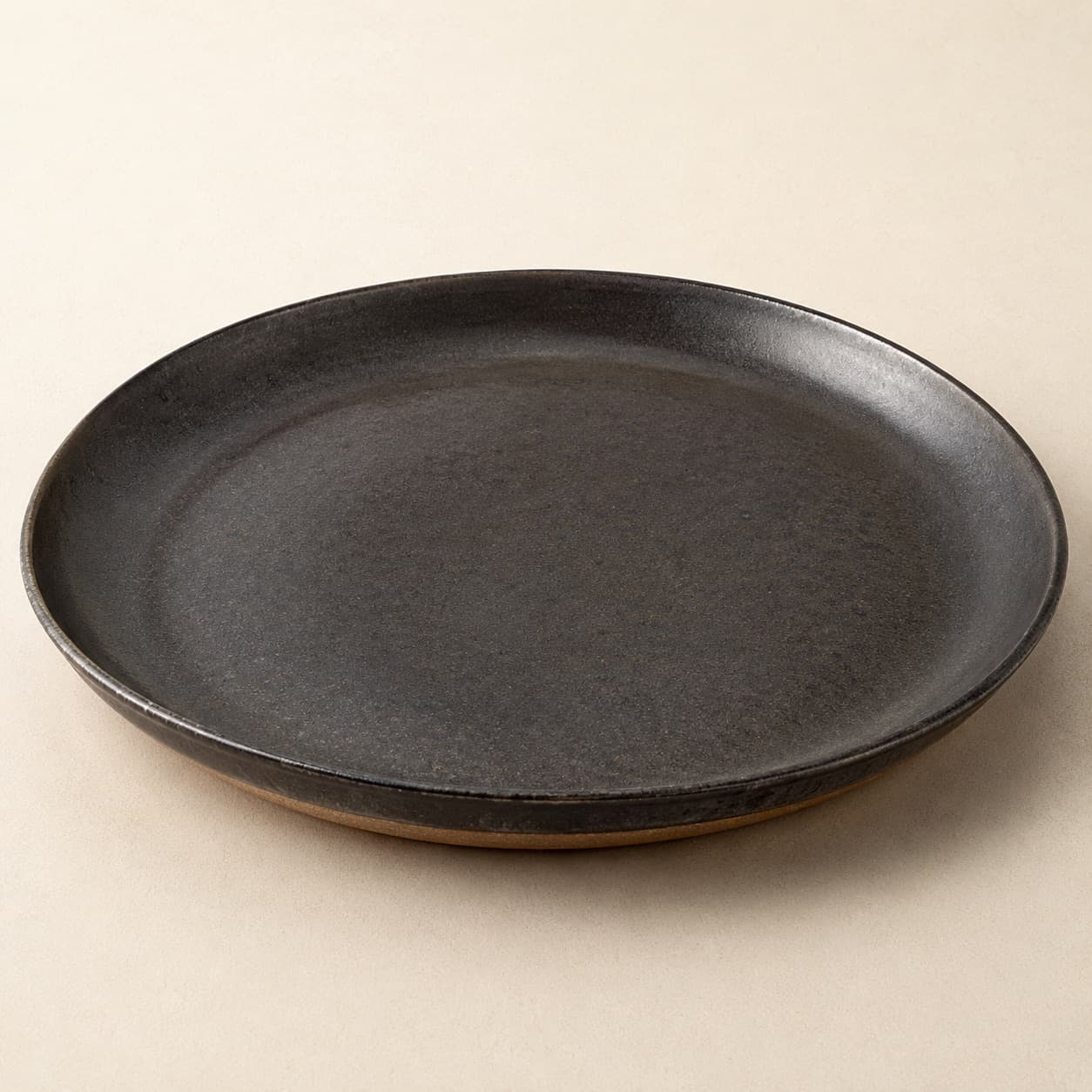

DKK 285
05 — Service builder
Three questions — where, how many seats, what is on the menu — and you get a piece count per category, a total, and the shelf height the whole configuration needs. The rules are arithmetic, they are published, and you can change any line before adding it.
It is an estimate based on ordinary turnover, not a promise. How much you actually need depends on how fast you turn tables and how often you wash.

06 — Resupply
Open stock exists so a sixteen-piece service does not become a fifteen-piece problem.
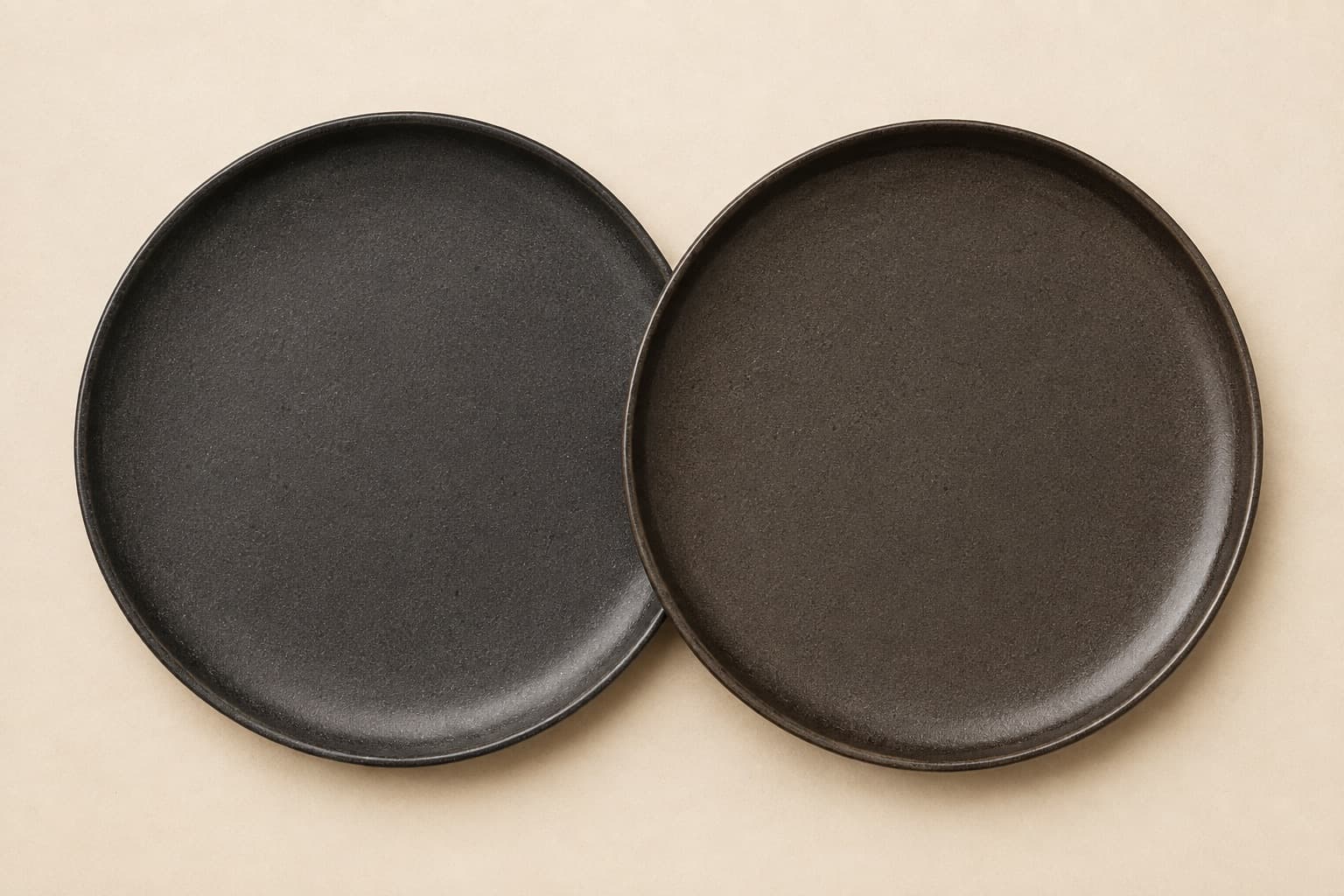
Two batches of the same glaze, side by side
The pieces most likely to go — the Ø26 plate, the Ø18 bowl, the 220 ml cup — are sold singly. What we will not do is pretend a replacement will be an exact match: the glaze is mixed and fired in batches, and two batches sit a shade apart.
So the current batch number is printed before you order, and if a piece is going out of production the page says so and names what takes over.
07 — Testing
A number without a method is marketing. These are the three methods behind everything printed on this site.
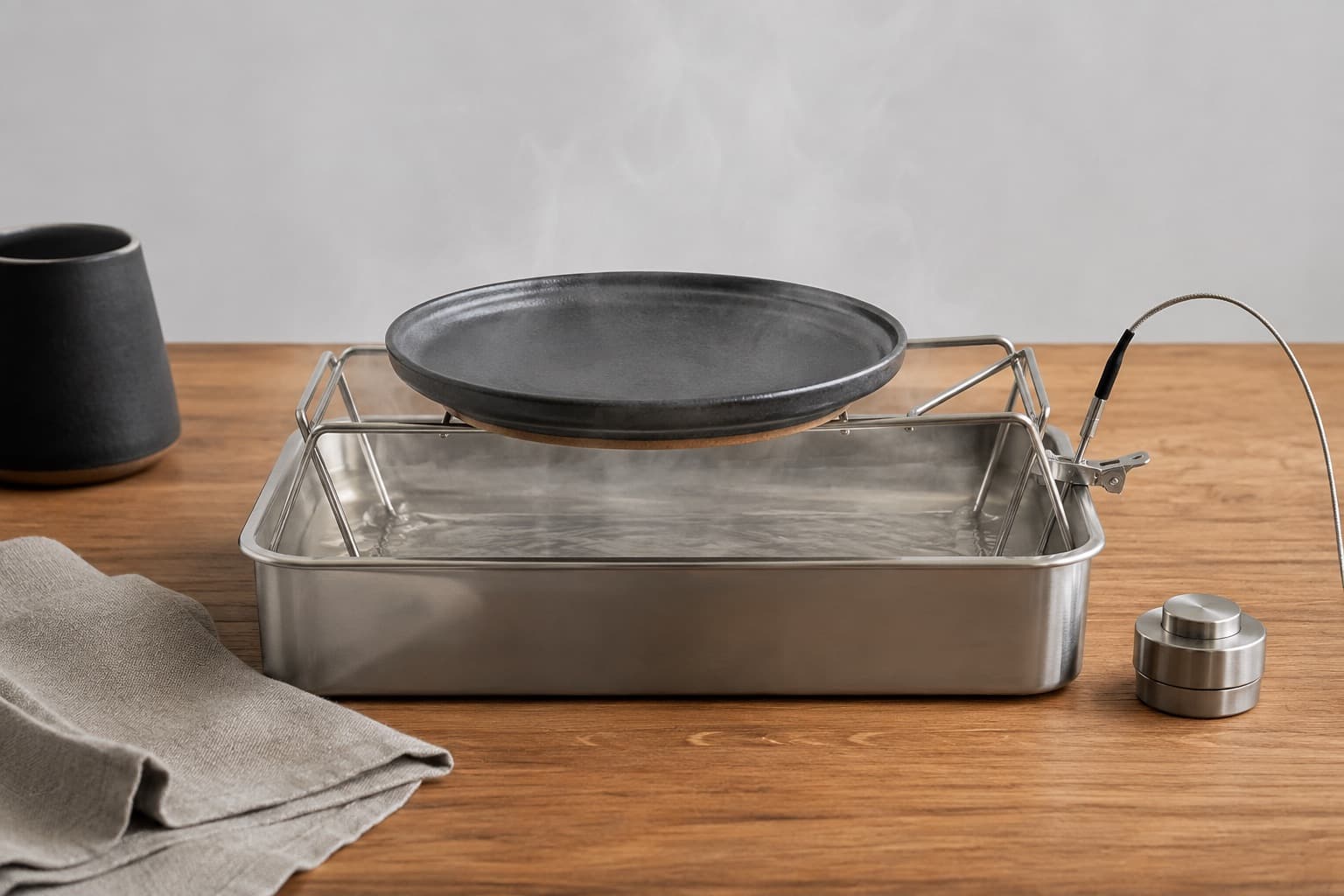
SL-TS-02
Sample pieces are held at 20 °C, moved into a fan oven at 140 °C and held for 30 minutes.
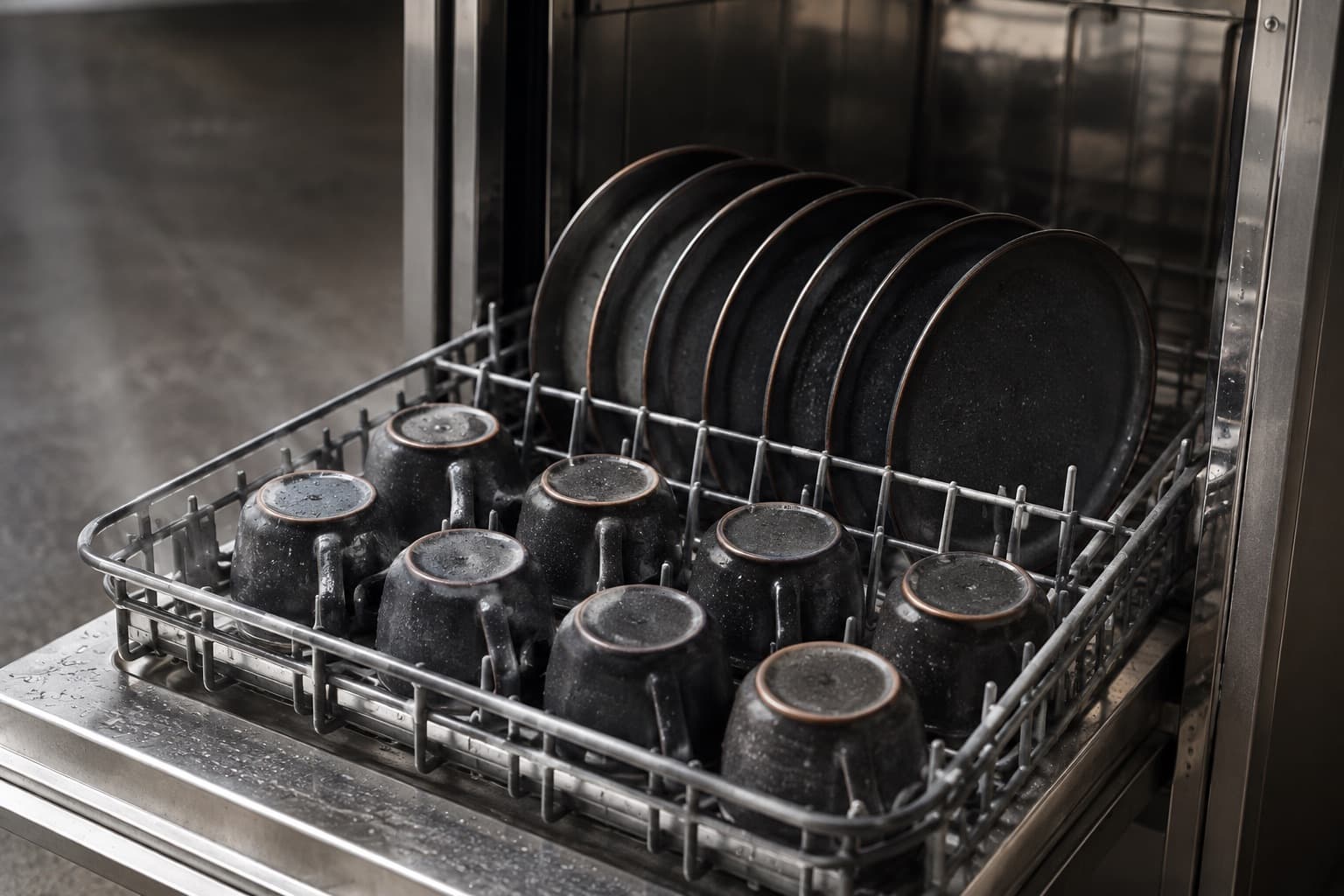
SL-DW-01
Commercial front-loading rack machine, 65 °C main wash and 85 °C final rinse.
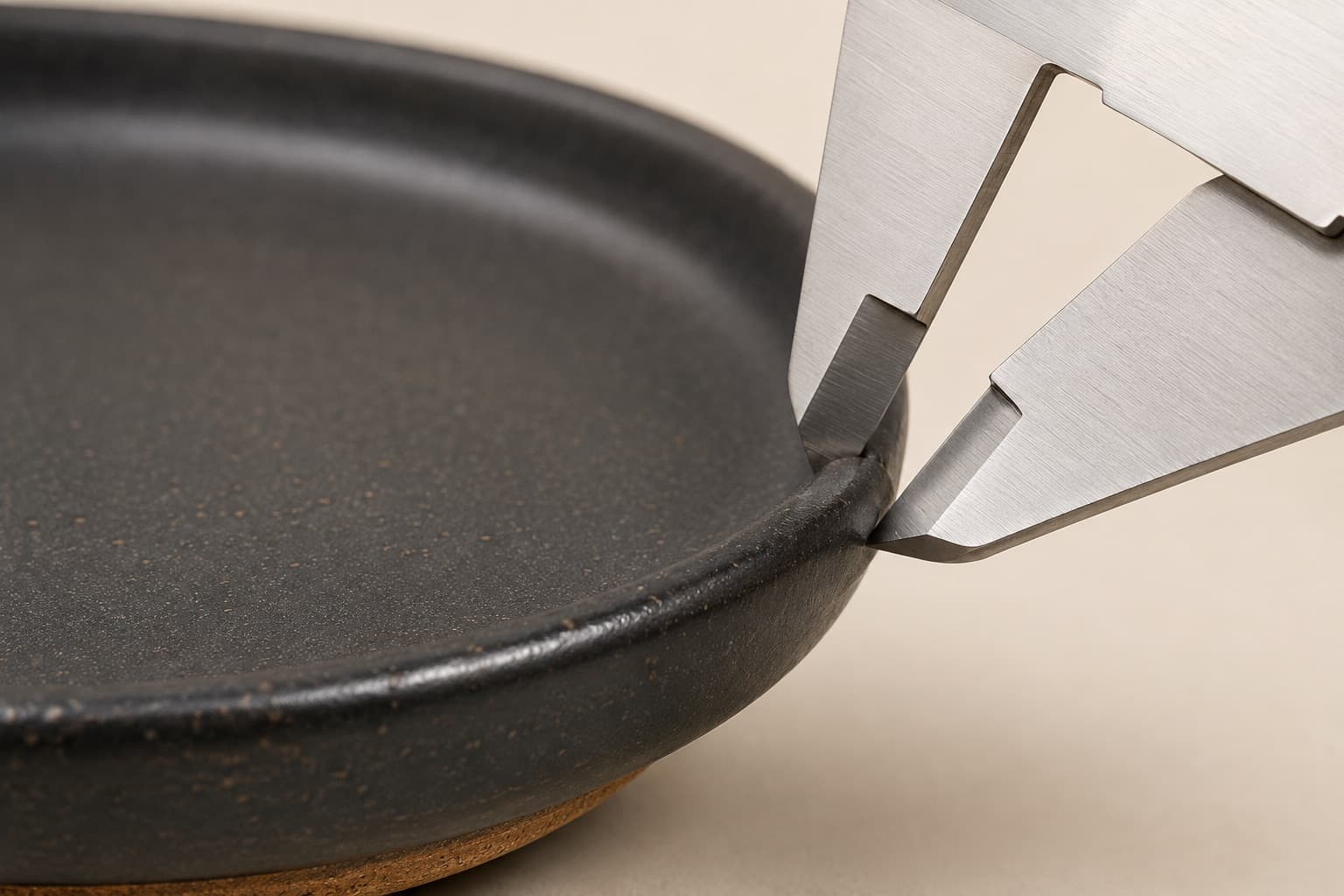
SL-RM-01
Rim thickness is measured with vernier callipers at eight points around the circumference.
None of this is a guarantee and none of it is a certification. It is what happened to sample pieces under stated conditions, published so you can judge it. Read the protocols in full
08 — Where it comes from
The forms, the sections and the glaze are drawn and specified in Frederiksberg. The pieces themselves are thrown and fired by a family stoneware workshop in Poland that has been doing this for three generations. Both facts appear on every product page, together, because publishing one without the other would tell you something untrue.
Stoneware, not porcelain — a different clay body fired at a different temperature to a lower porosity, with a heavier section and no translucency. The two are not interchangeable and we do not use the words as though they were.
About the workshop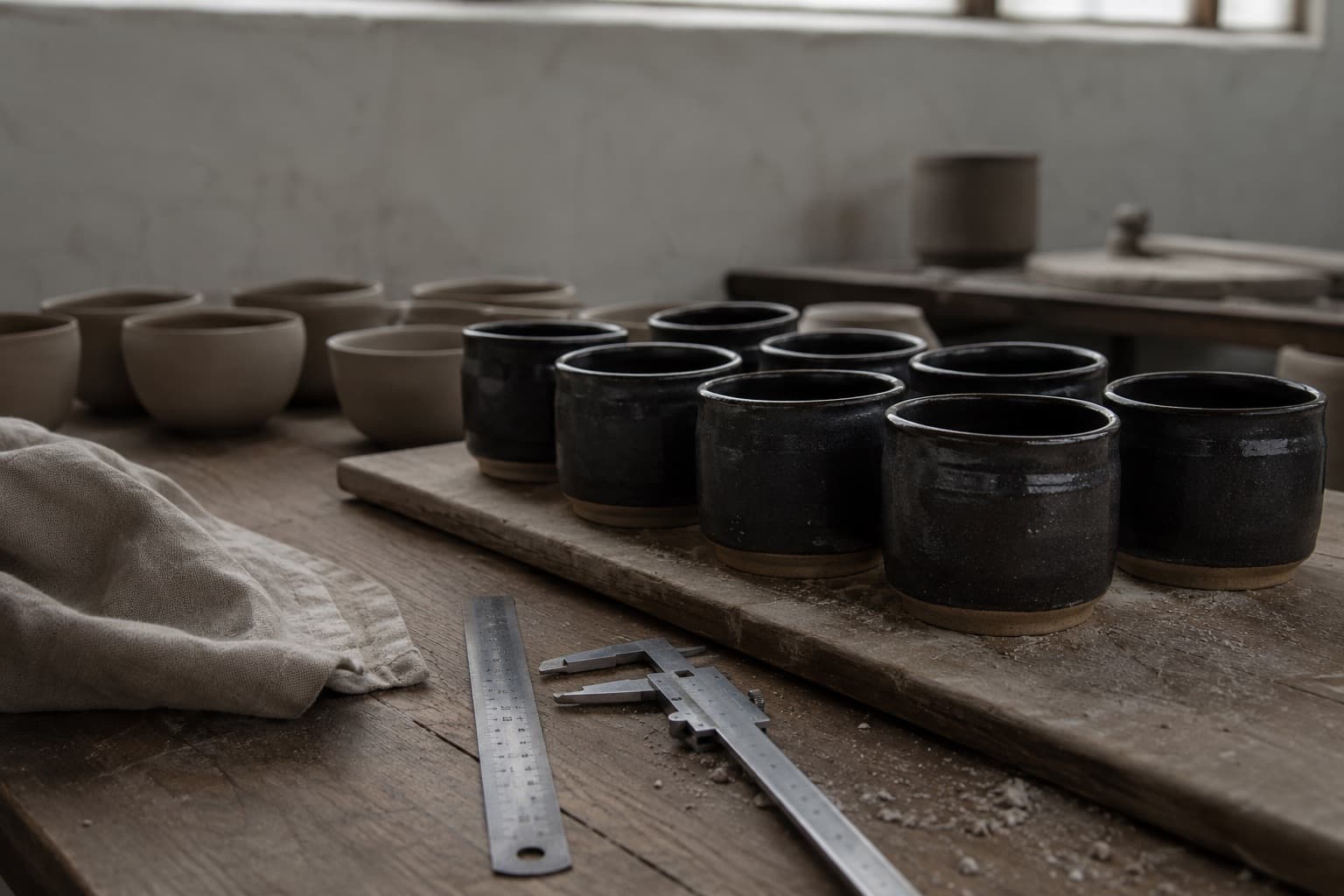
Every figure on this site is in DKK inkl. 25% moms. Shipping is shown before you pay, and is included over DKK 900.
Terms of saleStandard withdrawal form supplied. Everything here is a stock piece, so nothing is excluded as a custom order.
Right of withdrawalThe Danish right to complain runs for two years and is separate from withdrawal. Transit breakage has its own route.
Right to complainEvery piece states its glaze, its declaration reference and which migration-limit category it is assessed against.
Materials and safety