Holdbarhedstest
Where the numbers come from
This site sells on figures, so the figures have to be checkable. Here are the three protocols behind every cycle count and every section measurement we publish, written out in enough detail that you could run them yourself and disagree with us.
Last updated 13 August 2026 · Governing law: Denmark
What these tests are, and what they are not
They are a record of what happened. Sample pieces from a production batch were put through the conditions below and the point at which they changed was recorded. The number is the observation, not a promise.
They are not a certification. No notified body, standards organisation or trade association has assessed this range. These figures come from the workshop’s own testing; the log is available on request.
They are not a guarantee, and we make no absolute claims. You will not find the words that usually appear on ceramics marketing anywhere on this site — nothing here is described as immune to temperature change, immune to chipping or impossible to break. A fired ceramic is none of those things. What a piece does in your kitchen depends on how it is handled, how it is loaded and how it is washed, and no test can speak for that.
Thermal shock cycling — SL-TS-02
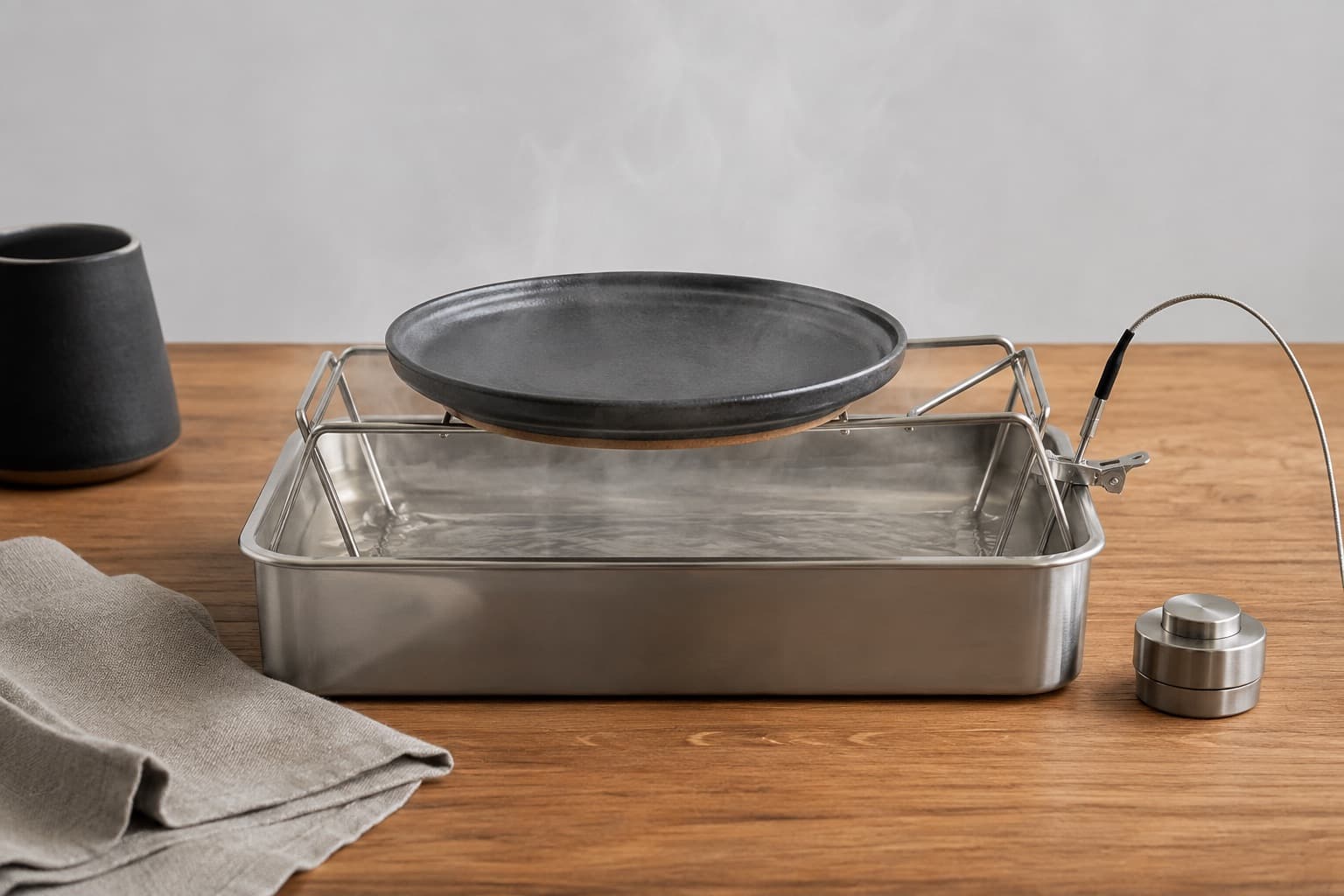
- Sample pieces are held at 20 °C, moved into a fan oven at 140 °C and held for 30 minutes.
- Each piece is then transferred directly into a 20 °C water bath and left for 60 seconds. That is one cycle.
- Every fifth cycle the piece is dried and inspected under raking light, then dye-penetrant tested for crazing.
- The published figure is the number of cycles completed before the first sample in the batch showed crazing.
Dishwasher cycling — SL-DW-01
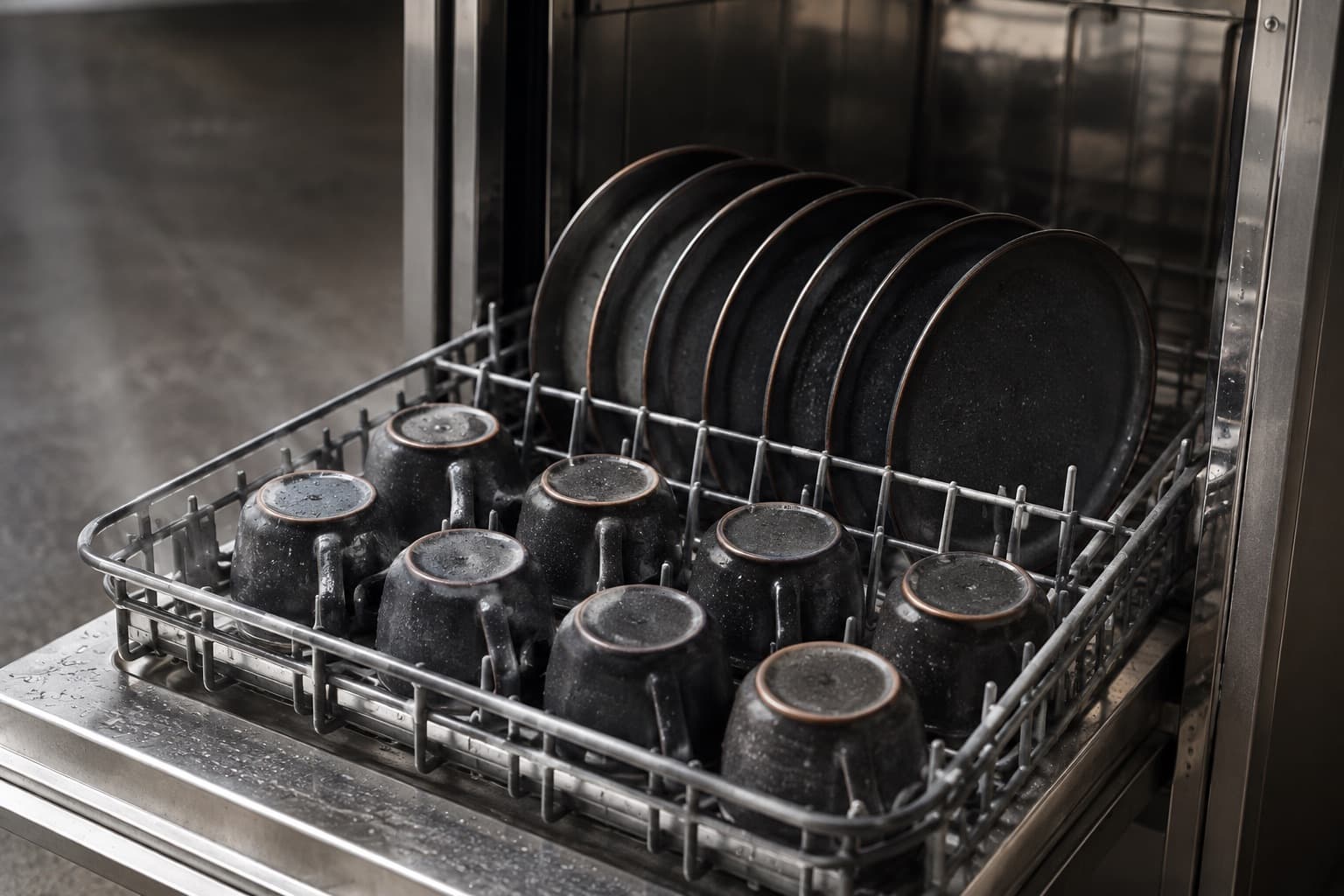
- Commercial front-loading rack machine, 65 °C main wash and 85 °C final rinse.
- Alkaline machine detergent dosed at 3 g/L with a rinse aid, water hardness 8 °dH.
- Pieces are loaded the way a working kitchen loads them: plates on edge, cups inverted, bowls nested one rack apart.
- Gloss is measured at 60° and the piece is weighed and measured every 100 cycles.
- The published figure is the number of cycles completed before gloss fell by more than 5 units or any dimension moved beyond ±0.5 mm.
Rim section — SL-RM-01
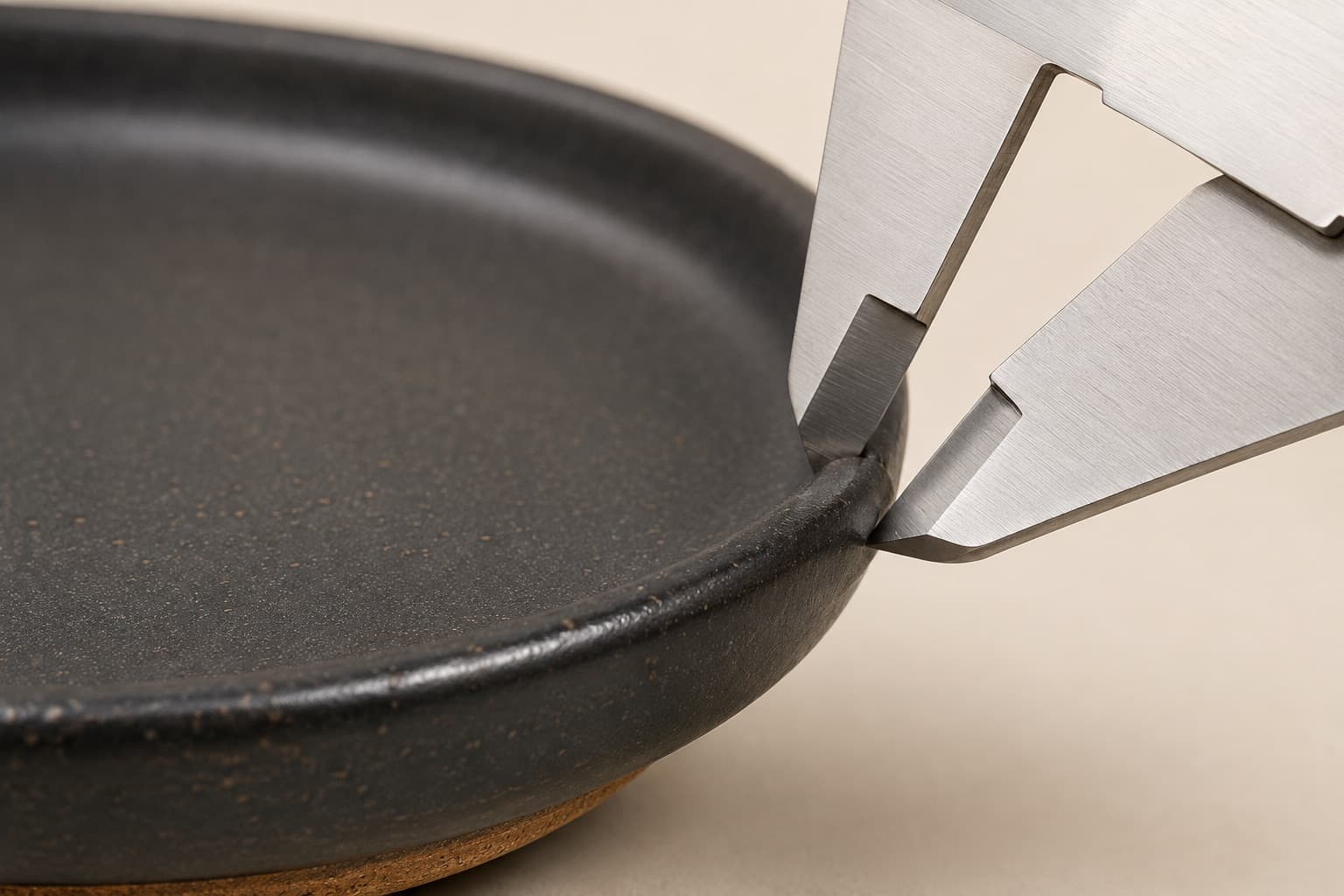
- Rim thickness is measured with vernier callipers at eight points around the circumference.
- The published figure is the smallest of the eight, not the average.
- A thicker rim carries more material at the point most likely to take a knock. It is not a guarantee against damage, and no piece here is sold as one.
How to read the thermal shock figure
A product page says something like “30 cycles at ΔT 120 °C”. That means sample pieces completed thirty full oven-to-water cycles across a 120 °C difference before the first one showed crazing. It does not mean the thirty-first will fail, and it does not mean the piece is unaffected by temperature change — it means thirty is where the batch started to move under those specific conditions.
Practical version: do not take a piece from the freezer into a hot oven, do not run cold water into a dish straight out of the oven, and let oven-rated pieces heat with the oven rather than going into one that is already hot above 180 °C.
How to read the dishwasher figure
“1,500 cycles” means gloss stayed within five units and every dimension stayed within ±0.5 mm for fifteen hundred commercial wash cycles. A café running its machine four times a day reaches that in about a year of service; a household reaches it in a decade. After that point the change is gradual surface dulling, not failure.
Detergent matters more than the machine does. High-alkalinity commercial detergent above about 4 g/L will dull a satin glaze faster than the figures here suggest, and so will a rinse cycle that lets pieces bake dry at high temperature.
How to read the rim section
The rim is where a plate takes its knocks, so it is the number worth publishing. We measure at eight points around the circumference and publish the smallest of the eight, because an average would hide the weak spot. A 5.0 mm rim carries more material at the point of impact than a 3.5 mm rim does — which changes the odds and nothing more. Every piece here can be chipped by a hard enough knock, and we do not sell any of them as being otherwise.
Sampling
Testing is on pieces drawn from production runs, not on specially made samples. Three pieces per form per glaze batch go into thermal shock, three into dishwasher cycling. When a batch result differs from the published figure by more than 10% we retest, and if it holds we change the number on the site rather than the number in the batch.
Ask for the log
The test log for any piece is available on request — email support@ancherstudio.shop with the piece and its glaze batch number. The same applies to the food-contact declarations, which are covered on the materials page.